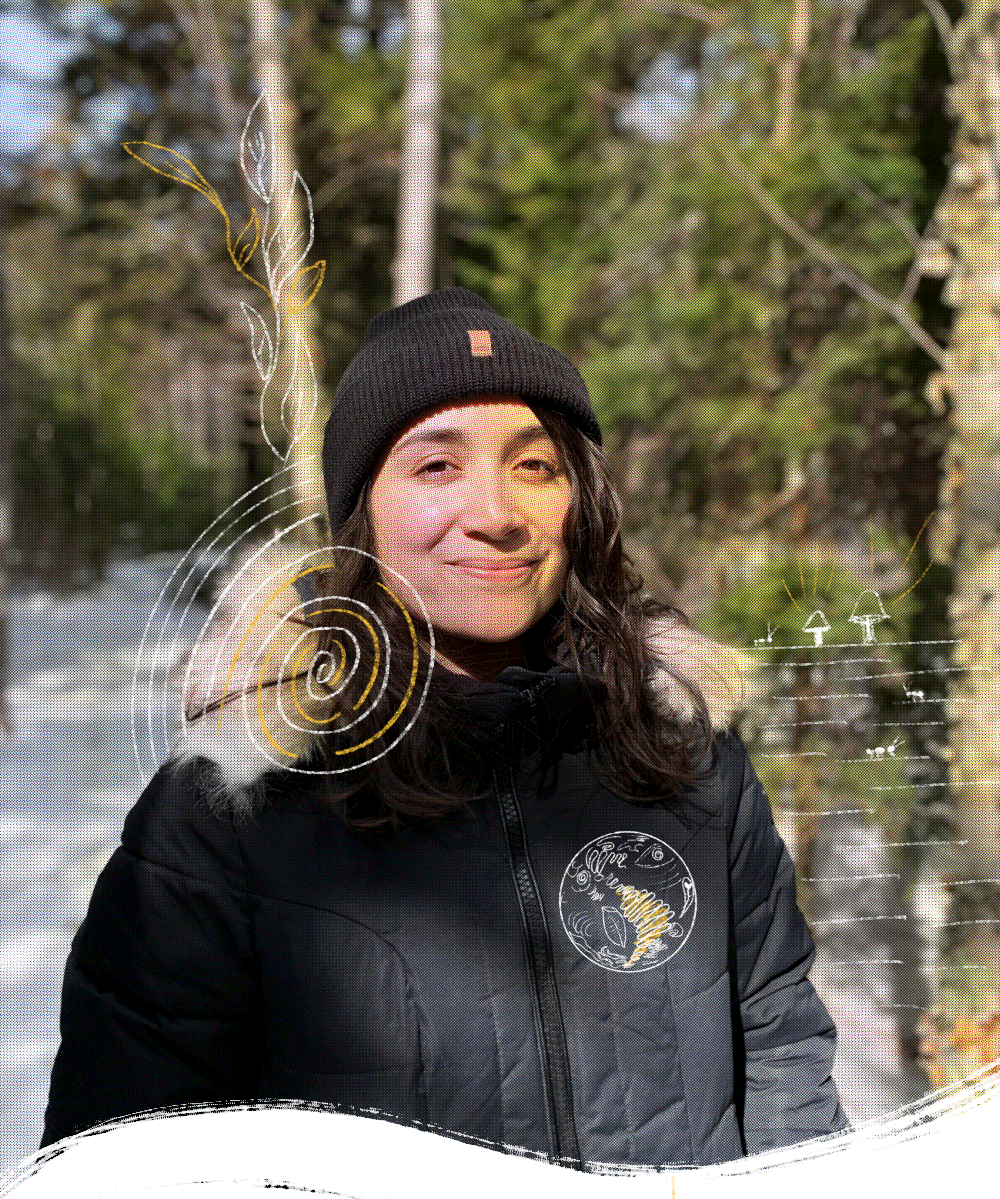
Giselly is a transdisciplinary designer, researcher, futurist, and artist from Támesis, Colombia and now based in New York. Her work bridges public policy, oral history, and speculative storytelling, exploring reparations, environmental justice, and Latin American futures.
As a Senior Advisor at the Public Policy Lab, she’s led The People Say and is currently developing an AI-powered tool to make public benefits communications clearer, more accessible, and compliant.
In parallel, she produces independent curatorial and artistic projects such as COCAWORLDS.
Her work has been presented at institutions including MAMBO, the Brooklyn Museum, Parsons School of Design, the United Nations Headquarters, and Open Society Foundations.
Practice
The WHAT:
Giselly’s practice takes the form of:
- Qualitative research
- Oral Histories
- Public policy briefs
- Service design
- Curation and exhibitions
- Facilitation of workshops and spaces for conversation and learning
- Visual ethnographies
- Design fiction and speculative narratives
- Communication strategies
The HOW:
Action Research
Exploring real-world issues through creative research methods, aiming to drive positive change.
Design and Art
Blending artistic creativity with practical design principles to craft engaging and impactful experiences
Futures and Systems Thinking
Analyzing complex systems and envision future possibilities through speculation and design fiction.
Co-creation
Facilitating collaboration that empowers diverse voices, driving innovation and shared ownership.
The WHY:
She works to counter social and environmental hopelessness by focusing on possibility, responsibility, and collective action.
Areas of interest:
Human relationships with the natural world: Exploring how people can reflect, learn, and build deeper connections with the living systems we depend on—treating nature as something to care for, not simply extract from.
Imagining alternative futures: Challenging dominant models of endless growth and consumerism, and researching community-based approaches to more just, sustainable futures rooted in solidarity and mutual care.
Oral history, collective memory, and storytelling: Supporting the sharing of lived experiences and intergenerational knowledge through storytelling as a tool for understanding, healing, and change.
Migration: Advocating for dignity, safety, and freedom of movement for all people.